The guy who sold
the table first.
Cody Ledden spent his entire run at Bistro North in Dillon, Colorado as a server — and outsold every other server in the building. Per Plate is the course he was asked to teach that floor.
Three people. One argument.
Restaurants train order takers. We train sellers. Everything else is a detail.
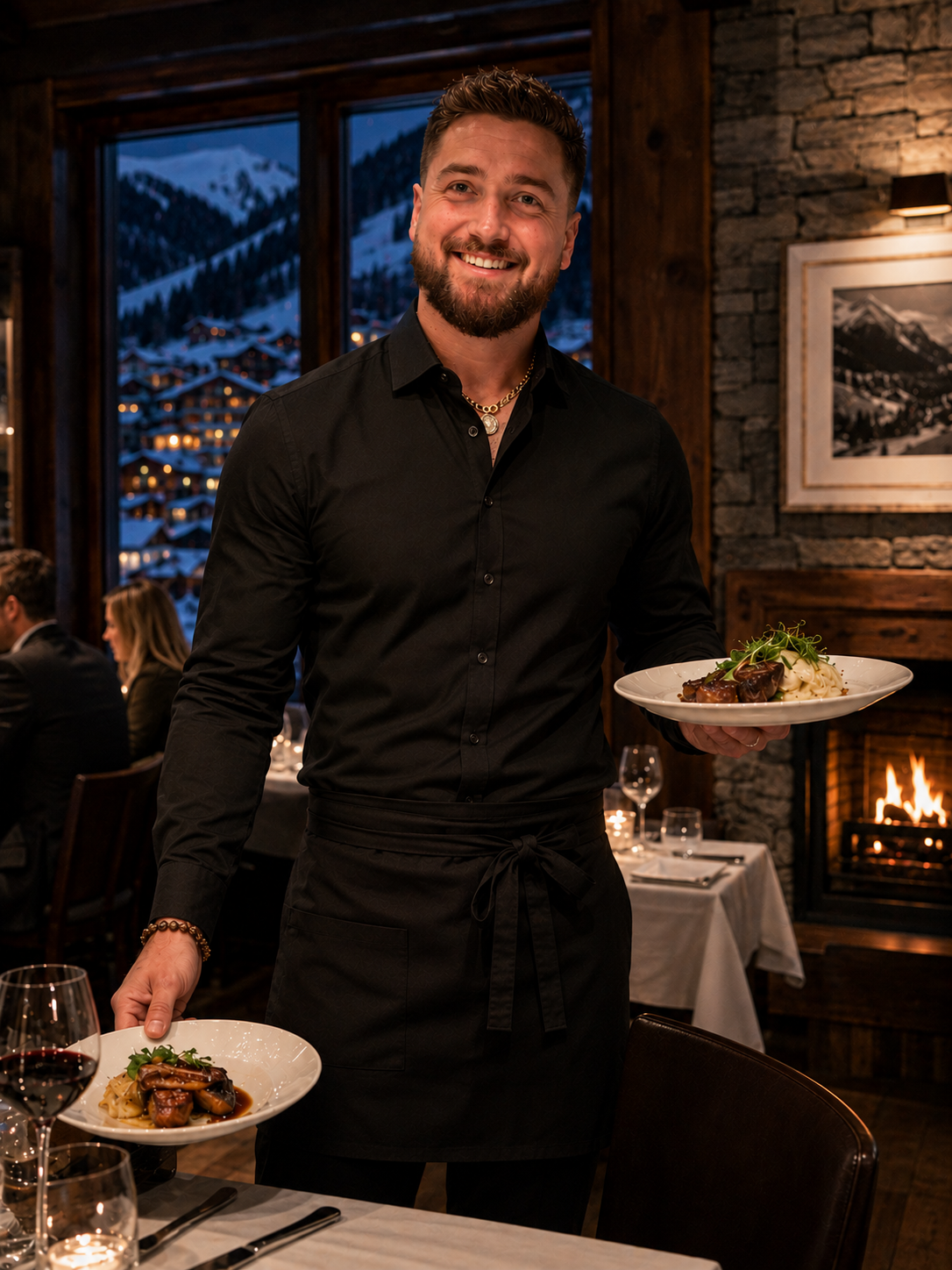
The Guy Who Sold the Table First.
Per Plate isn't theory. It's the playbook of the highest-earning server on the floor, turned into a system any restaurant can run.
Cody Ledden walked into Bistro North in Dillon, Colorado in October 2021 as a server. He stayed a server the entire run. No promotion, no title, no salaried escape hatch — just a section and a nightly number.
He was the top seller inside his first two months and never gave the spot back. His per-plate average ran about forty percent higher than the second-best server in the building. On desserts he outsold every other server across both restaurants combined — thirty-plus people — year over year.
He treated the table like a sales call, not a transaction: read the party before the greet, anchor the recommendation, name the dish instead of the category, and ask for dessert before anyone has decided they're full. Same menu as everyone else. Different order of operations.
Eventually management stopped guessing and asked him to teach it. He built and ran a sales course for the rest of the floor, then took over trainer onboarding for new hires with selling at the center of it. Servers who ran his method lifted per-plate by ten to forty percent.
That course, plus the menu knowledge that makes it work, is what became Per Plate.
One of the guests he sold that year was a door-to-door sales leader named Kuba Marusarz, who ordered a dessert he had already turned down — and tipped extra for the privilege. That table is where Per Plate started.
“The numbers weren't a fluke. They were a method.”
Great servers are made. So are great teams.
Kuba was the guest at that table. He'd spent his career in door-to-door sales — Cutco first, then pest control — so he knew exactly what he was watching. Cody wasn't taking an order. He was running a close. Kuba told him he had real talent and should come sell with him. He did.
Over the last four years, Kuba's teams have produced more than $15 million in revenue. But the number he'd rather talk about is retention — his teams have consistently held the highest account retention in the organization, and it comes from one discipline he drills into everyone he trains: set the expectation correctly, then deliver against it. Customers stay when they're never surprised.
That's not a door-knocking skill. That's a hospitality skill.
Kuba builds the culture that makes a floor worth working on: how you develop people, how you keep them, how you handle it when the night goes sideways. He's the reason Per Plate is a company instead of an idea two guys had at a table once.
He's been in both rooms.
Jace has worked the floor and he's worked the sales side — which is a rarer combination than it sounds. He served in restaurants, then spent years on Kuba's sales teams, where he built a sharp read on sales psychology and what actually makes a crew stick together.
Hospitality is in the family. His grandfather served on the Michelin board — the body that sets the standard most restaurants never get within reach of. Jace grew up around what that level of guest experience actually requires, and he connects Per Plate to rooms most training companies never get invited into.
They asked him to teach it.
The turn that matters isn't that one server sold more. It's that the restaurant asked him to make everyone else sell like that — and it worked.
He outsold the floor
Top seller within two months of starting, and every month after. Forty percent above the #2 server on per-plate average.
He built the course
Management asked him to teach a sales course to the rest of the servers. Not soft skills — the actual sequence he ran at the table.
He onboarded new hires
He then took over trainer onboarding, built around selling from day one instead of tray handling and POS buttons.
The method, in the order he runs it.
Per Plate turns this into five-minute daily sets and guest role-play, built on top of your own menu.
Read the table before the greet
Celebration, business dinner, or a couple counting the check. The read decides everything that follows — what you lead with, what you skip, and how fast you move.
Anchor the recommendation
Never open with a category. Name a specific dish, give one concrete reason, and let the price sit next to something higher. Guests want a decision made easy, not a list read aloud.
Dessert is sold at entrée drop
The reason dessert attach collapses is timing, not appetite. The ask happens before the table decides it's full — and that single change is where most of the per-plate lift comes from.
Handle the no without losing the table
Allergies, dietary limits, the guest who wants something you don't serve. Servers rehearse these in role-play until the redirect sounds like hospitality instead of a pitch.
Your floor is in trained hands.
Trained by the top seller, not a vendor
The method came off a real floor with real POS numbers behind it — not from a consultant who has never had a section.
A repeatable system, not a personality
He already proved it transfers. Servers who ran his course lifted per-plate by ten to forty percent — people who were not him.
Measured in your own POS
Every claim gets settled by the nightly sales report you already read. If check average doesn't move, you'll see it first.
And nothing reaches a server until your manager approves it. The curriculum is his — the language, the specials, and the pitch stay yours.
Put his method on your floor.
Twenty-five full-service restaurants get founding pricing, locked for as long as they stay. Then the door closes.